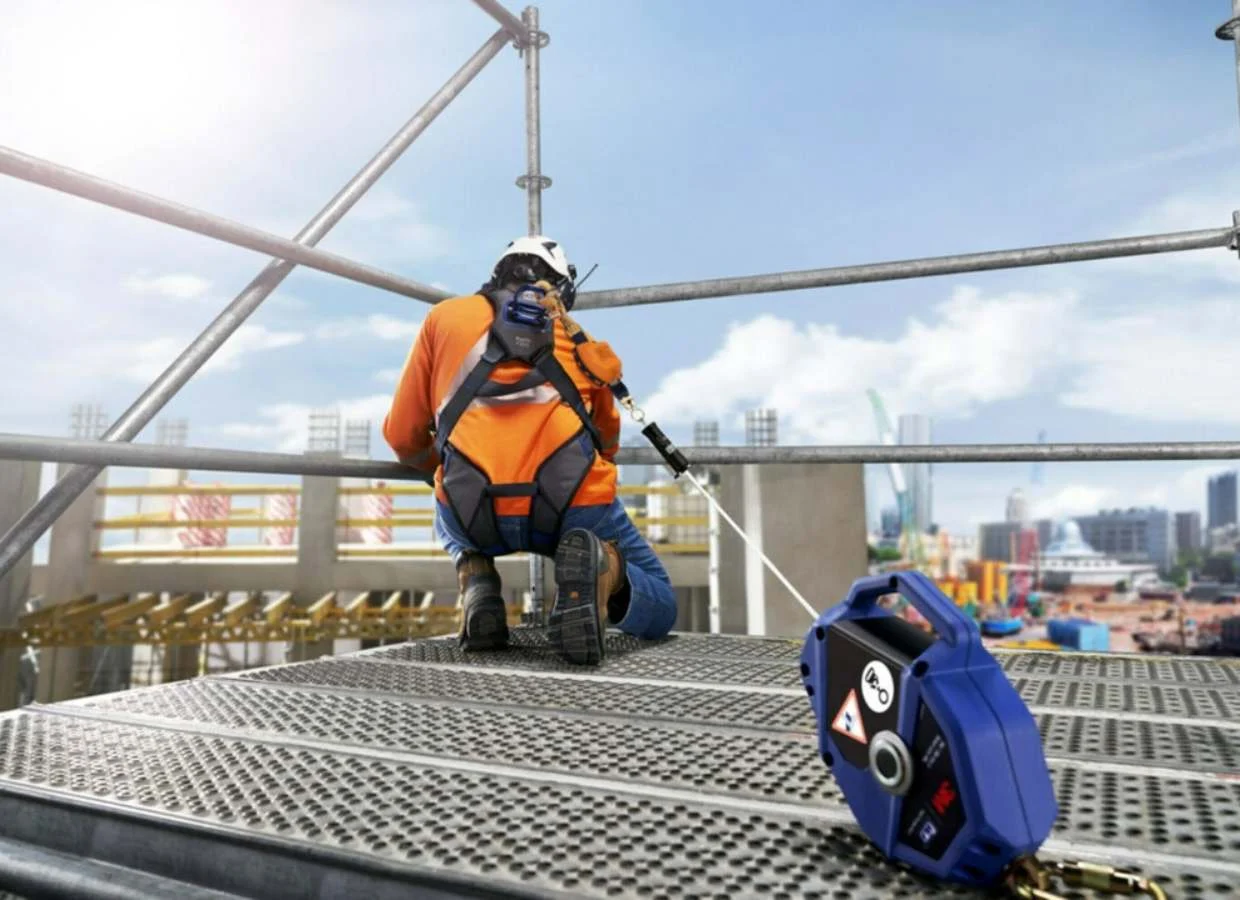
Why Work at Heights and Dropped Objects Still Hurt People in 2026
If you lead construction safety in Canada, you already know the pattern: when projects accelerate, trades stack up, and scaffolds, MEWPs, roof work, and steel erection ramp up, the risk profile changes overnight. Falls from height remain a leading cause of catastrophic injuries and fatalities. What is often under-discussed is the other half of the same hazard: dropped objects. A one or two pound tool dropped from a platform can become a lethal projectile. A tape measure from a roof edge can strike a worker, damage equipment, or injure the public outside your fence line.
The best work-at-heights programs treat fall prevention and dropped object prevention as one integrated system: you control the edge, you control the zone, you control the tools and materials, and you verify controls before work starts.
A strong work-at-heights program is not just harnesses and anchors. It is planning, engineered edge protection, disciplined material control, and verified exclusion zones.
What Counts as a Dropped Object Hazard
A dropped object is any tool, component, material, or debris that can fall from an elevated position and create risk to workers below, adjacent work areas, or the public. Dropped objects are often grouped as static drops (items dislodged from a fixed location, such as stacked materials or wind-blown debris), dynamic drops (items dropped during handling, such as tools slipping from hands or bolts removed during maintenance), and ejected items (items propelled by stored energy, such as cut-off wheel fragments or pinch-point releases).
The most effective controls start with identifying where elevated work intersects with people, equipment, walkways, access points, and public exposure.
Canadian OHS Requirements: The Common Threads
Canada's provinces and the federal system have different rulebooks, but the themes are consistent: employers must prevent falls, use appropriate fall protection systems when thresholds are met, train workers, and ensure equipment is suitable and maintained. Many jurisdictions use a common benchmark around 3 metres (10 ft), and also require protection at lower heights when the fall hazard could cause serious injury, for example onto rebar, equipment, or uneven surfaces.
In British Columbia, the OHS Regulation requires a fall protection system when a worker may fall 3 m or more, or when a lesser fall presents greater injury risk. For federally regulated workplaces, the Canada OHS Regulations require personal fall-protection systems when a fall-protection plan requires them and reference CSA standards for equipment. Alberta's OHS Code includes detailed fall protection requirements (Part 9) and toe board rules where materials may fall. Ontario's construction regulation (O. Reg. 213/91) outlines when and how fall protection must be provided.
Know your jurisdiction's thresholds and system requirements, then build your project standard to meet the strictest standard on multi-employer sites.
The Hierarchy of Controls for Work at Heights
The fastest way to improve outcomes is to apply the hierarchy of controls to both fall hazards and falling object hazards. If your site relies mostly on PPE, you are leaving risk on the table.
Eliminate: Can the task be done from the ground? Can we pre-assemble at grade, or use prefabrication or remote methods?
Substitute or change method: Use a MEWP with guardrails instead of ladder work; use a controlled material hoist instead of carrying materials up scaffolds; standardize tether-ready tools and holsters.
Engineering controls: Guardrails, hole covers, temporary edge protection, toe boards, mesh, debris netting and catch systems, tool tether anchor points, and overhead protection structures. These reduce both fall risk and dropped object risk at the same time.
Administrative controls: Fall protection plans, dropped object prevention plans, competent supervision, restricted access, safe work procedures, toolbox talks, and inspections, verified daily and whenever conditions change.
PPE: Full body harnesses, lanyards and SRLs, helmets with chin straps where required, and eye and face protection when flying debris is possible. PPE is effective only when the system is compatible and workers are trained.
Your Fall Protection Plan Should Include Dropped Objects
A fall protection plan should be site-specific and cover how you identify hazards, select systems, inspect equipment, train workers, and execute rescues. If your plan does not address dropped objects, you are missing a major exposure that usually appears at the same time as fall hazards. Minimum components include scope (where work at heights occurs), system selection (guardrails and covers first, then travel restraint, then fall arrest where appropriate), anchors and lifelines (approved, rated, inspected), a rescue plan (roles, equipment, suspension trauma considerations, and drills), dropped object controls (tethering, containment, exclusion zones, overhead protection), and verification before the shift and after any change.
Make it impossible to start overhead work without confirming both fall controls and falling object controls.
Dropped Object Prevention That Works on Real Jobsites
Control the edge: Toe boards, mesh, and debris netting prevent tools and materials from leaving platforms; covers over openings prevent small items from falling through.
Control the tool: Standardize tool tethering, define which tools must be tethered and acceptable attachment points, and use manufacturer-approved or engineered attachment points rather than improvised ties.
Control the zone: Barricade and sign areas below overhead work, and upgrade controls where the public is exposed with covered walkways, overhead protection, and scheduling.
Control the lift: Dropped objects spike during hoisting and material transfers, so use defined landing zones, controlled access, tag lines, and never allow work under suspended loads.
Control weather: Build wind thresholds and winter-specific controls into pre-task planning.
Dropped object prevention is a system: edge, tool, zone, lift, and environment. Missing one layer recreates exposure.
Supervision and Verification
Most failures happen during transitions: shift changes, moving scaffolds, changing work faces, new subcontractors, or schedule pushes. Competent supervision means verifying controls, not assuming yesterday's setup is still safe. A daily verification checklist should confirm that openings and edges are protected, anchors are identified and rated with clearance and swing-fall risk addressed, harnesses and lanyards are inspected, toe boards and netting are installed where needed, tool tethering is in place, exclusion zones are barricaded and signed, and the hoisting plan is reviewed with no work under suspended loads.
If it is not verified, it is not controlled.
Employer Action Plan: 30 Days
Week one, standardize: publish minimum standards for thresholds, selection order, and tool tethering; identify approved equipment; map exclusion zones. Week two, engineer: install or upgrade edge protection, covers, toe boards, mesh, and netting, and add tether anchor points. Week three, verify: roll out daily checklists and Safe Start checks, and conduct supervisor ride-alongs. Week four, sustain: run a dropped-object near-miss campaign, track KPIs such as the percentage of overhead tasks with verified zones, and drill rescue procedures.
Conclusion
Work at heights safety is not just a compliance checkbox. It is a life-safety system. When you integrate fall protection with dropped object prevention, you protect workers above and below, reduce public exposure, and strengthen due diligence. Plan the work, engineer the edge, control the tools, barricade the zone, and verify before the first step onto an elevated surface.
Need help building or auditing your fall protection and dropped object program? Talk to TruStar Safety.